- Region
- Bumburet, Rumbur & Birir, Chitral
- Length
- 9 days
- Group size
- Maximum 8
- Effort
- Easy
- Season
- Spring
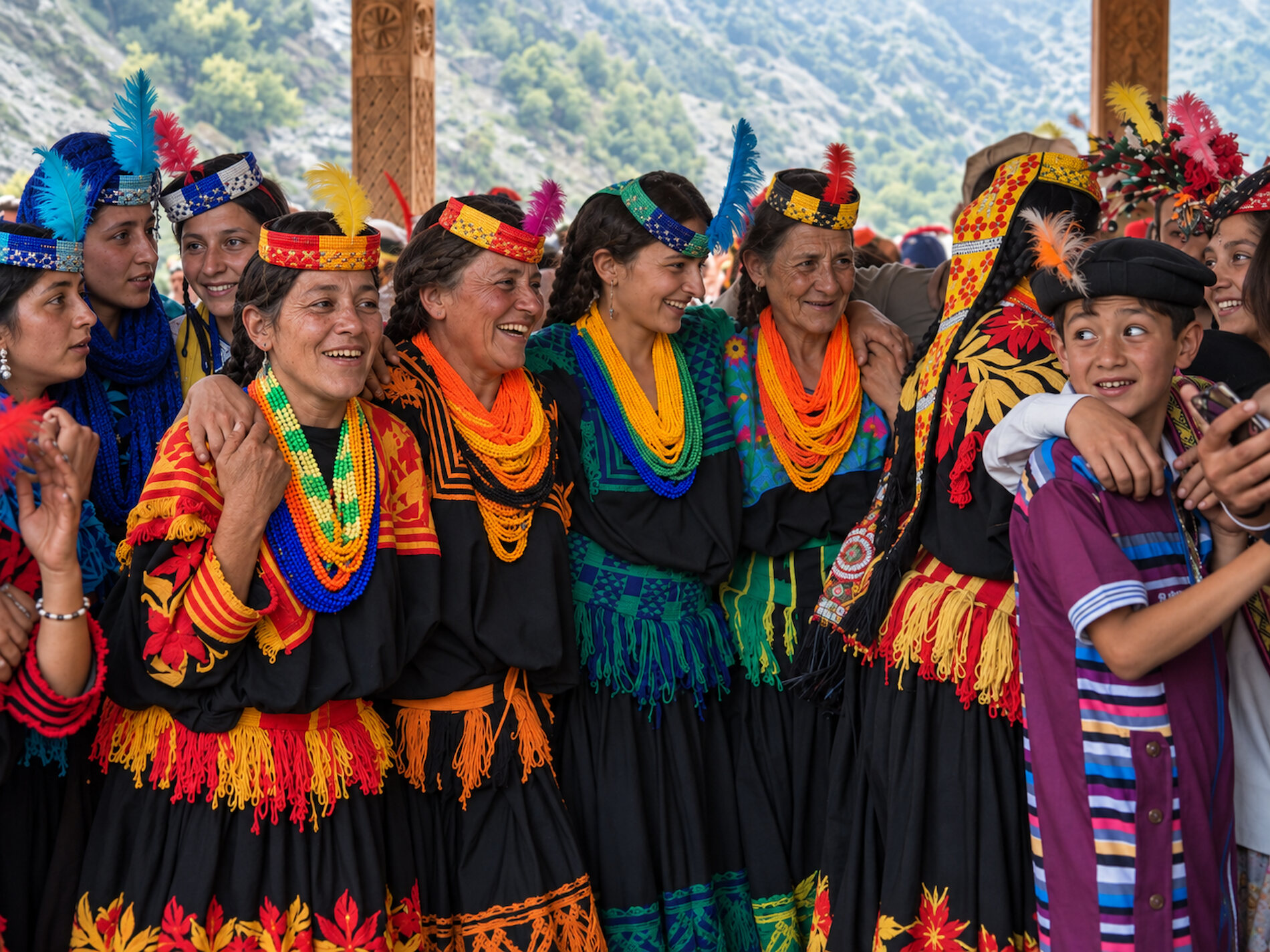
Chilam Joshi marks the moment the herds are readied for the high pastures, and it is the most visited point in the Kalasha year. That popularity is exactly the problem. Groups arrive for two days, photograph the dancing, and leave.
This itinerary is built the other way round. You arrive before the festival and stay after it, so that the days either side, the ordinary ones, carry as much weight as the celebration itself. Group size is capped at eight because a valley of a few thousand people cannot absorb more than that without the visit becoming the event.
Day by day
The itinerary
Day 1Arrive Chitral+
Fly or drive in, settle, and meet the team over dinner. A briefing on what is welcome in the valleys and what is not.
Day 2Into Bumburet+
The road up into the valley, and the first afternoon simply walking it. No agenda beyond getting your bearings.
Day 3 to 4Rumbur, slowly+
Time with families who have agreed in advance to host visitors, and an introduction to the irrigation channels that make settlement here possible at all.
Day 5 to 6Chilam Joshi+
The festival across two days. We stay where we are asked to stay and photograph only where photography is welcome.
Day 7Birir+
The least visited of the three valleys, and the quietest. A different feel entirely from Bumburet.
Day 8Craft and language+
A working session with the documentation team: how a recording is actually made, and what happens to it afterwards.
Day 9Return to Chitral+
Back down the valley and onward travel.
The practical part
What is and is not included
Included
- All accommodation for eight nights
- All ground transport from Chitral
- Breakfast and dinner daily
- Local guides and interpreters throughout
- Community access fees, paid directly to the valleys
- A contribution to the documentation fund for every booking
Not included
- International flights and Pakistan visa
- Domestic flights to Chitral
- Lunches and personal spending
- Travel insurance, which is required
Before you commit
Fitness, beds and kit
How hard is it
Easy. Days involve walking on valley paths, some of them steep and uneven, for two to four hours at a time. No technical terrain and no altitude concerns.
Where you sleep
Simple guesthouses in the valleys, chosen because they are locally owned. Rooms are basic, shared bathrooms are normal, and hot water is not guaranteed every night. This is the honest version rather than the brochure one.
What to bring
- Walking boots already broken in
- Layers: spring nights in the valleys are cold
- Modest clothing that covers shoulders and knees
- A head torch
- Any medication you need, in original packaging
Responsible travel
Who benefits
Accommodation, guiding and transport are booked through people who live in the valleys, and community access fees go directly to the valley committees rather than through an agency. A fixed share of every booking funds the recording work.
Cultures on this route
Questions
Asked often
- Can I photograph the festival?
- In some places yes, in others no, and the distinction is not always obvious to a visitor. Your guide will tell you where photography is welcome. Where the answer is no, it is not negotiable.
- Is this suitable for solo travellers?
- Yes. Most people come alone. Single rooms are limited, so a single supplement may apply once pricing is set.
- Do I need to speak any Urdu?
- No. Interpreters are with the group throughout.